
Antique Coffee Grinders: What to Look For
Old coffee mills combine useful mechanical design with wonderful kitchen history. Here are the details we check before researching a vintage or antique grinder.
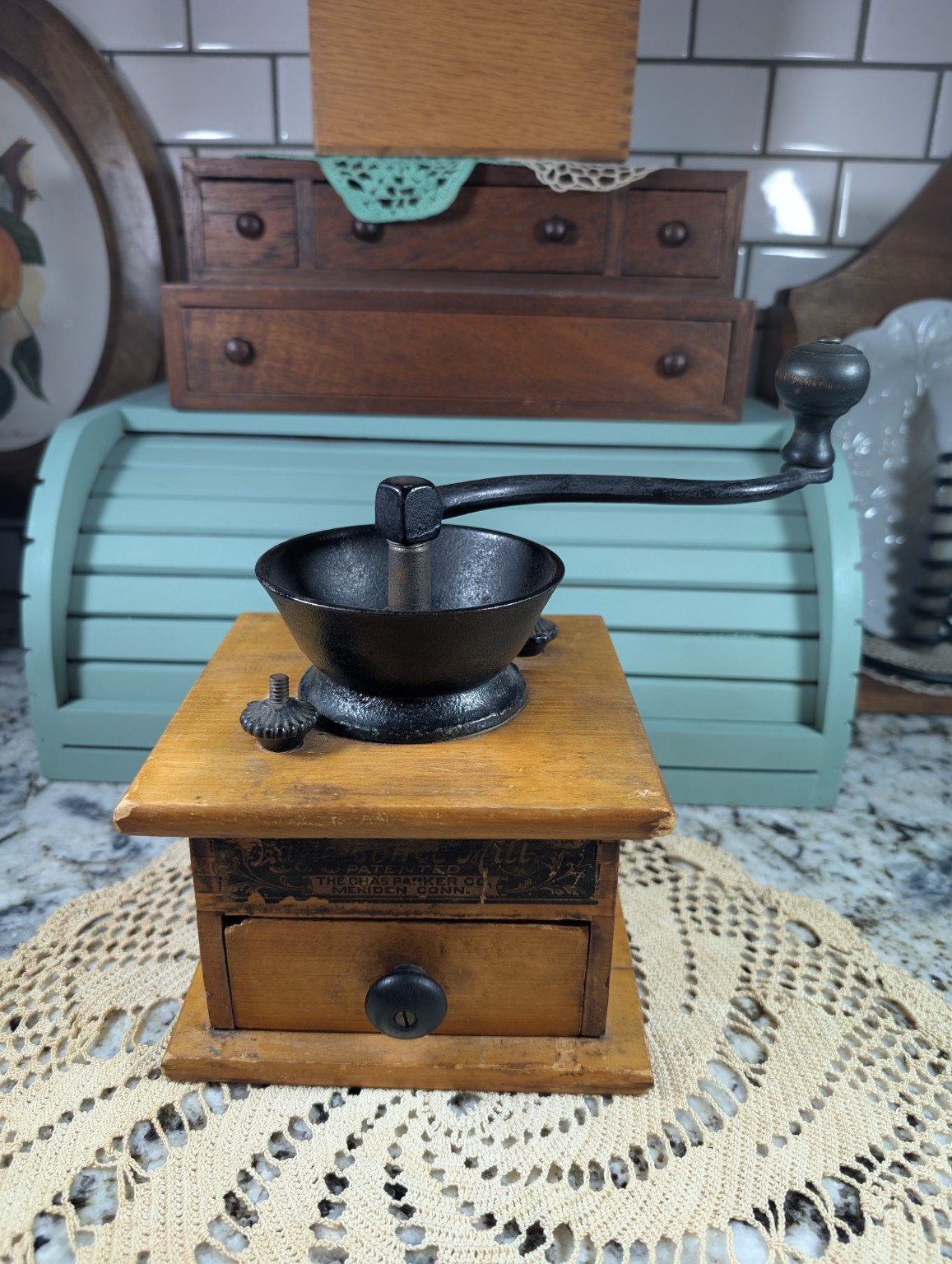
Identify the basic style
Common forms include wooden box mills with a drawer, wall-mounted grinders and larger cast-iron mills. The construction style helps narrow the era and manufacturer, but replacement parts and reproductions mean you should examine the entire piece.
Search for maker information
Look for paper labels, decals, cast names, patent information or stamped markings on the body, handle and grinding mechanism. Even a partial label can be useful. Photograph it before cleaning because fragile labels can be easily damaged.
Check the mechanism
Turn the handle gently. A surviving grinder does not need to operate perfectly to be collectible, but a complete crank, burr mechanism, hopper and drawer are helpful. Avoid forcing a seized mechanism, especially if rust is present.
Preserve original character
Old wood finishes, paint, labels and hardware can be part of a grinder’s appeal. Aggressive sanding or refinishing may remove useful evidence of age. Start with gentle dry cleaning and research the piece before attempting restoration.
Condition affects both display and value
Look for cracks in the wooden box, missing drawer knobs, replaced screws, heavy corrosion and damaged labels. Some wear is expected on an old kitchen tool and can add character when the piece remains structurally sound.
Browse our current eBay listings or visit The Vintage Belle Boutique at Quality Consignments, Booth 127 in Colchester, Connecticut.
Shop Current Finds